


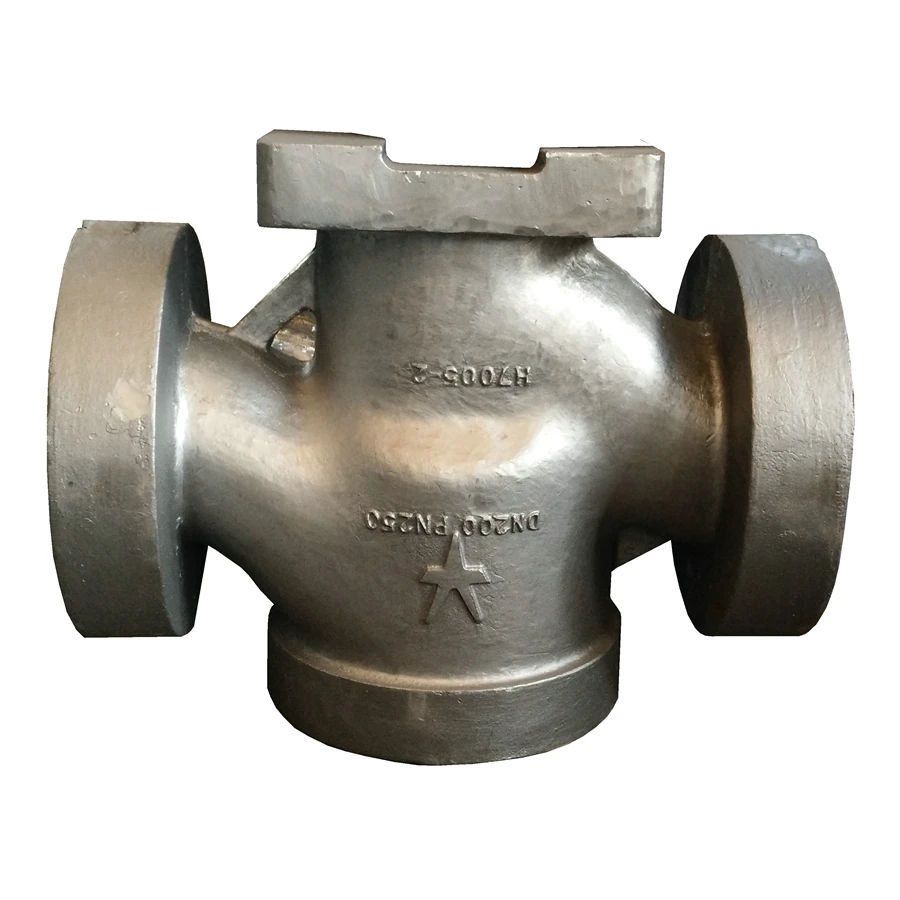


DN200 Pn250 Globe Valve Casting
Introduction to DN200 PN250 Globe Valve Casting: Resin Sand Casting Process and Advantages
DN200 PN250 globe valve casting is a process of manufacturing valve bodies for globe valves with a nominal diameter of 200mm and pressure rating of 250 bars. The valve bodies are typically made using a resin sand casting process, which offers several advantages over other casting techniques.
Resin Sand Casting Process and Advantages
The resin sand casting process is a popular method for manufacturing globe valve bodies due to its many advantages. The process involves creating a mold using sand mixed with resin to make it more durable. The molten metal is then poured into the mold, and once cooled, the mold is broken away, leaving the valve body.
One of the main advantages of the resin sand casting process is its ability to produce accurate and detailed parts with a smooth surface finish. This is due to the high dimensional accuracy and low surface roughness of the sand mold. Additionally, resin sand casting allows for greater design flexibility and customization, making it suitable for various applications.
Another advantage of the resin sand casting process is its efficiency in producing large quantities of parts. The process is highly automated, which reduces labor costs and increases production speed. Additionally, the cost of the raw materials used in resin sand casting is relatively low, making it a cost-effective manufacturing process.
Globe Valve Casting Process
The globe valve casting process involves several steps, starting with the creation of the sand mold. The sand mold is made by mixing sand with resin and other additives to create a mold of the desired shape. Once the mold is created, the molten metal is poured into the mold, and after it has cooled, the mold is broken away, leaving the valve body.
After the valve body is removed from the mold, it undergoes several finishing processes to remove any casting defects and ensure that it meets the required specifications. This includes grinding, sandblasting, and polishing the surface to achieve the desired finish.
Advantages of Globe Valve Casting
Compared to other manufacturing processes, globe valve casting offers several advantages. One of the main advantages is its ability to produce complex shapes and designs with high accuracy and precision. Additionally, casting allows for the creation of larger valve bodies that are difficult to achieve through other processes.
Casting is also a cost-effective manufacturing process, especially for large volume production. This is due to the relatively low cost of raw materials used in casting and the efficiency of the process.
Conclusion
In conclusion, DN200 PN250 globe valve casting is a manufacturing process used to create valve bodies for globe valves with a nominal diameter of 200mm and a pressure rating of 250 bars. The process involves creating a sand mold using resin and pouring molten metal into the mold to create the valve body. The resin sand casting process offers several advantages, including high dimensional accuracy, low surface roughness, and greater design flexibility. The process is also cost-effective and efficient, making it a popular choice for manufacturing valve bodies.
Hot Tags: dn200 pn250 globe valve casting, China dn200 pn250 globe valve casting manufacturers, suppliers, factory
Previous
Globe Valve Part CastingYou Might Also Like


Send Inquiry