


Gate Valve
We are a gate valve manufacturer,the company is the professional business which producing valves steel casting and valve products. The company has annual production capacity of 6,000 tons of steel casting. It is one of the strongest professional casting enterprises in China. Our products for high temperature and high pressure gate valve,ball valve,globe valve, exhaust valve and other switch valves, high plus three-way valve, high and low pressure bypass valve, control valve, butterfly valve and etc.
Why Choose Us?
Our Factory
Kaifeng Ruiwei Fluid Technology Co., Ltd was established in 2017 with a registered capital of 2 million yuan, 50 employees and 48 technicians. Its main business includes research and development of flow control equipment, technology transfer, technology support ,research and development of new materials for valves.
Production Equipment
In order to manufacture high-quality products, our company is equipped 5T medium frequency furnaces, 2.5T medium frequency furnaces, 0.75T medium frequency furnaces, the resin sand flask molding lines with German technology, multiple shot-blasting machines, heating treatment furnaces, full set of model making and excellent mechanical processing equipment.
Production Market
One of the suppliers of China's five major power generation groups, CNPC, CNP, Daya Bay Nuclear Power Station and Qinshan Nuclear Power Station.
Fast Delivery
The manufacturing process, we providing customers with one-stop service of instant production progress, storage delivery,efficient transportation, on-site installation guidance and debugging.


Advantages of Gate Valve
Gate Valves Have Low Fluid Resistance
The gate valve’s body is a straight-through shape that does not alter the flow direction, allowing fluid to pass through the valve with minimal resistance compared to other types of valves.
Gate Valves Provide Superior Sealing Performance
Gate valves provide better sealing performance than shut-off valves. The gate valve’s opening and closing mechanisms are faster and more convenient than those of the shut-off valve.
Gate Valves Have A Wide Application Range
Gate valves are extremely versatile and can be used in applications with mediums like steam, oil, and other media. Plus, gate valves can be used in mediums containing granular solids and with high viscosity. It can also be used as a venting valve and a low vacuum system valve.
Gate Valves Are Bidirectional
Gate valves have dual flow directions. They’re not limited to one-way flow, nor are they subject to the flow directions of the medium. Therefore, gate valves are suitable for use in pipelines where the flow direction May change. Plus, they are easier to install than other more sophisticated types of valves.
Application of Gate Valve
Oil And Gas Industry
Gate valves are extensively used in the oil and gas industry as they provide tight shutoff, handle high-pressure and high-temperature fluids, and isolate different parts of the pipeline or system. They are commonly used as isolation valves to shut off sections of pipelines, allowing other valves or equipment to regulate flow to specific areas or equipment.
Water Treatment Plants
Gate valves can isolate sections of pipelines or tanks to allow for maintenance and repairs without affecting the rest of the system’s operation.
Chemical And Petrochemical Industry
Gate valves are commonly used in the chemical and petrochemical industry for their ability to handle abrasive and corrosive fluids while isolating and controlling the flow of materials.
Power Generation Plants
Gate valves are used in power plants for their high flow capacity and ability to provide tight shutoff, which prevents the leakage of fluids and helps control the flow of steam, water, and other fluids in different parts of the system.
Types of Gate Valve
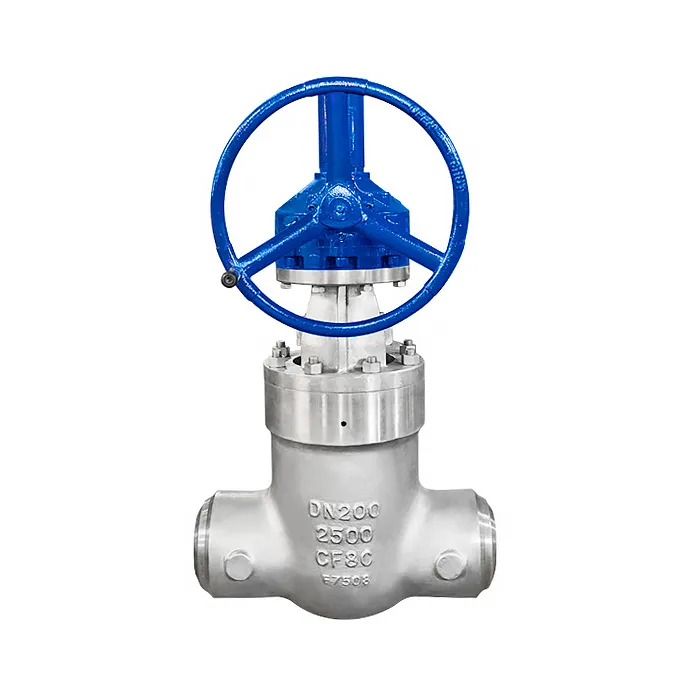

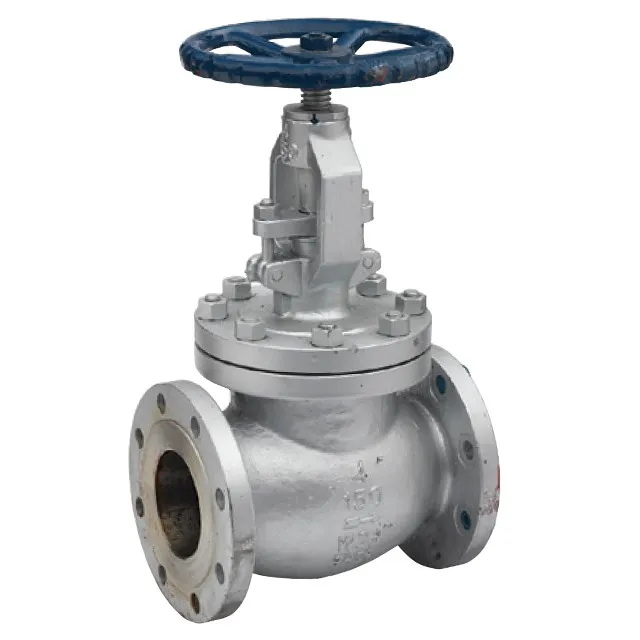

Rising Stem Gate Valves
The transmission mode of rising stem gate valves is that a handwheel or an actuator drives the nut to rotate in place, and the valve stem rises and falls linearly. Through the threaded transmission of the valve stem and the steering wheel, the valve disc is lifted and lowered to complete the switching.
Non Rising Gate Valve
Non rising gate valve refers to the outer stem, also known as non rising sluice valve or blind stem wedge gate valve. In a non rising gate valve, the valve stem will turn to open and close the gate, but the valve stem will not move up or down as it turns. When the valve stem turns, it enters or moves out of the valve, which also moves the gate to open or seal the valve.
Solid Wedge Gate Valve
Wedge gate valves differ from parallel gate valves in that the closures are wedge shaped rather than parallel. The purpose of the wedge is to introduce a high auxiliary seat load so that the wedge gate valve can seal not only high fluid pressures but also low fluid pressures.
Resilient Wedge Gate Valve
Resilient wedge gate valves are one of the most prolific designs in the water industry. Resilient seal gate valves have a common valve bottom, which uses a fully rubber-sealed wedge to prevent the embedment and build-up of sand and sediment that can cause damage on metal-seal gate valves.
Bolted Bonnet Gate Valve
The bolted bonnet gate valve is a gate valve that provides sealing in larger valves and high pressure applications. The bolted bonnet fitting for gate valves is the most popular fitting and it is used for most gate valves in industrial use today.
Bellows Seal Gate Valve
The main function of the bellows-sealed valve gate valve is to prevent any toxic chemicals from leaking into the atmosphere. In the chemical industry, the medium in the pipeline is usually toxic, radioactive and dangerous, so the bellows gate valve is required to ensure the tightness of the pipeline.
Pressure Testing Methods for Gate Valves
The strength test of the gate valve is the same as that of the sanitary shut-off valve. There are two types of sealing performance tests for gate valves.
Standard gate valve test method:
Open the gate plate.
Allow the pressure inside the valve to rise to the specified test value.
Close the gate plate.
Immediately remove the gate valve to check for leakage on both sides of the gate plate sealing. If you find any leakage, immediately replace the valve with a new one.
Alternate gate valve testing methods
Middle-pressure test:
Alternatively, you can directly instill the test medium into the plug on the valve cover to the specified value.
Check the sealing at both sides of the gate plate. This method is not applicable in gate valves whose nominal diameter is less than dn32mm.
Blind plate test:
Open the gate plate.
Allow the system pressure in the valve to rise to the specified value.
Close the gate plate.
Open the blind plate on one side to check the sealing surface for leakage.
Repeat the test until it is qualified.
The sealing performance test of the pneumatic gate valve stuffing and gasket should be carried out before the valve’s sealing performance test.